An Enlightened Beginning
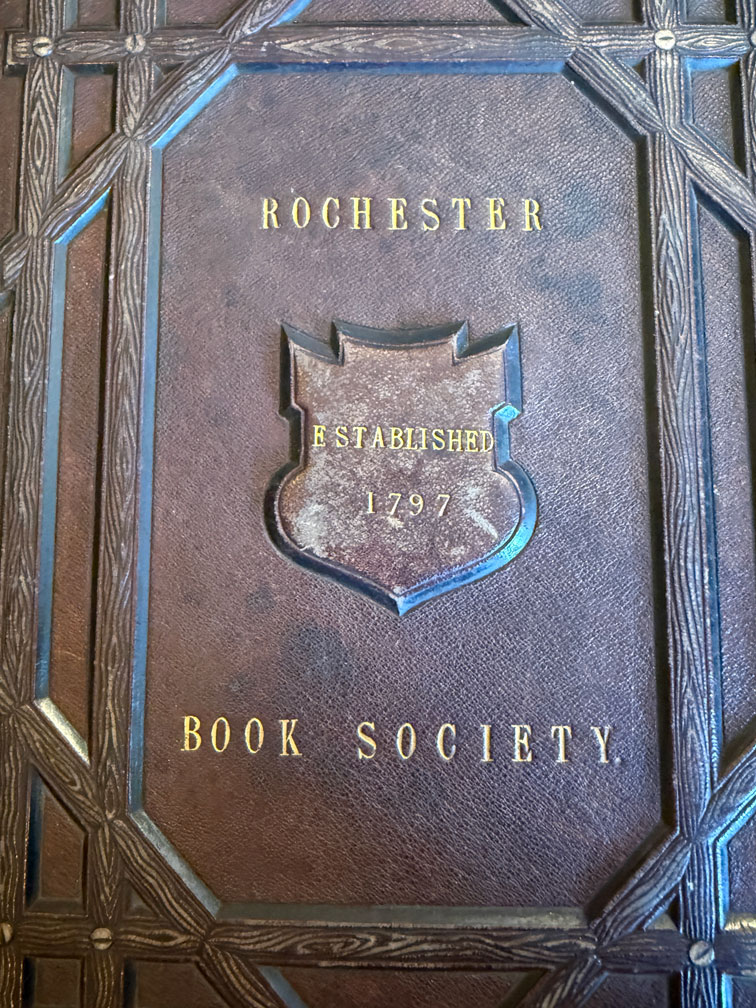
Founded on 22 December 1797, in the uncertain years following the French Revolution, the Rochester Book Society was established with a simple but ambitious purpose: to encourage the acquisition, discussion and sharing of knowledge amongst its members.
Its founding declaration stated that members had joined together:
“In order to render mutual assistance to each other in the attainment and cultivation of useful knowledge.”
The Society’s members purchased books collectively, read and discussed them together, and then circulated them amongst themselves. Weekly meetings became an established feature of Society life and, in what would later become a familiar tradition at The Castle Club, these intellectual pursuits were frequently followed by a convivial supper.
Beginning with just twenty-six members, the Society steadily grew in stature and influence. By its centenary in 1897, membership had increased to forty, reflecting its success as one of Rochester’s most respected social and literary institutions.
THE SEED IS SOWN
Although founded as a book society, its members quickly discovered that friendship and fellowship flourished just as readily as learning.
The Society occupied a succession of meeting places throughout Rochester. Its earliest home was the Sir John Falstaff, which was eventually abandoned after being deemed an “improper place”. Thereafter, the Society moved to the Star Hotel in Eastgate, the City Coffee House, the Bull Hotel, and ultimately, in 1920, found its final home within The Castle Club.
As the years passed, the Society’s activities expanded well beyond the discussion of books.
In 1836, the purchase of equipment for the game of bat, trap and ball led to the development of organised sporting outings, which became an annual event from 1851 onwards. These occasions invariably concluded with the civilised combination of shrimp, strawberries and cream.
The Society’s first Annual Supper was held in 1848, establishing a tradition that continues to resonate within Club life today.
By the latter half of the nineteenth century, members had also developed a taste for excursions upon the River Medway. The first recorded river trip took place in 1873 aboard the barge Malster, whose provisions included wine, stout, sandwiches and oysters in quantities considered entirely appropriate by Victorian standards.
The most celebrated of these expeditions occurred in 1882, when the barge Black Eagle sailed down the Medway carrying thirty-seven members and no fewer than one thousand oysters.
Only the souls returned.
TWO INTO ONE
By the years following the First World War, the Rochester Book Society was facing financial difficulties and its future appeared uncertain. In 1920, its members found a natural refuge within The Castle Club, an institution whose values of friendship, discussion, learning and dining closely mirrored those upon which the Society had been founded more than a century earlier.
Although the Rochester Book Society itself eventually ceased to exist as an independent organisation, its legacy remains an important part of The Castle Club today.
Its library, including a complete and continuing run of Archaeologia Cantiana, is preserved within the Club’s Reading Room. The Society’s eighteenth-century President’s Chair and historic ballot box remain in regular use, providing a tangible link to a tradition of fellowship and intellectual curiosity that stretches back more than two centuries.
The merger of the two organisations enriched both. The Castle Club inherited not only treasured artefacts and books, but also a spirit of learning, sociability and good company that continues to define Club life today.
