THE EARLY DAYS
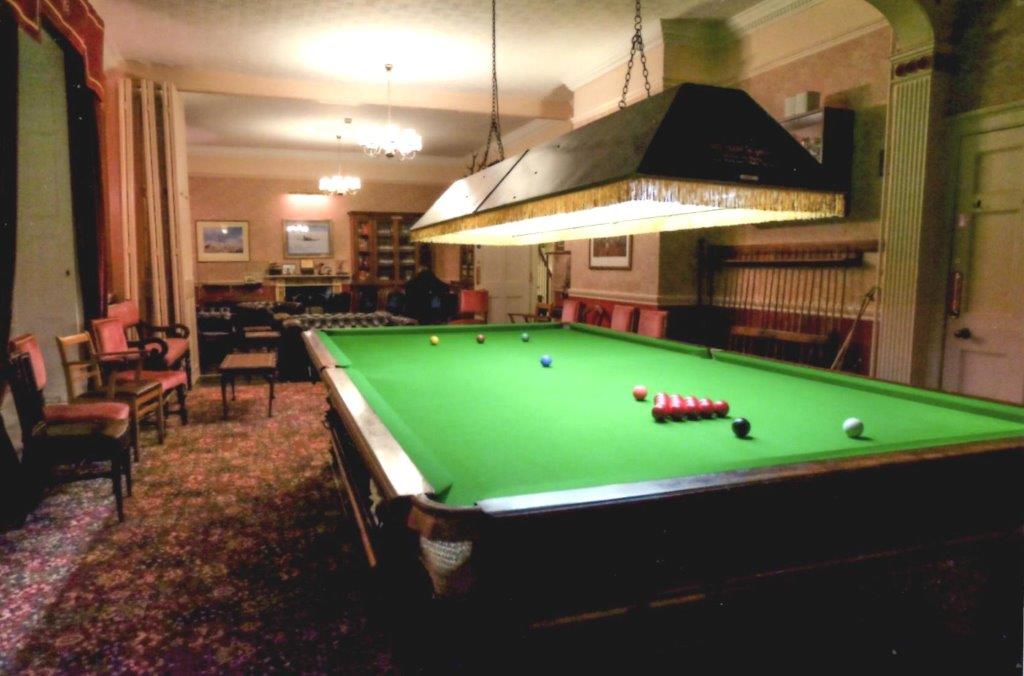
Founded in 1865, The Castle Club began life in rooms within Watts Baths, Rochester, where members gathered to enjoy cards, billiards and the reading of the day’s journals. It quickly became a popular place for gentlemen seeking companionship, conversation and recreation in the heart of the city.
The Club’s first home was far from ideal. Watts Baths, which also housed the Medway Rowing Club, were neither especially spacious nor particularly convenient. As membership grew, the need for larger and more suitable accommodation became increasingly apparent.
In 1879, the Club moved to Bridge Chambers, situated beside the eastern approach to Rochester Bridge. The move marked an important step in the Club’s development. For the first time, meals could be served to members, and income from dining, card games and billiards proved sufficient to cover the annual rent of £60.
It is from this era that one of the most curious entries in the Club’s records survives:
April 1881: Received for damage done to a boy – £2 15s 0d
Quite what circumstances led to this transaction has unfortunately been lost to history, although it remains one of the more colourful mysteries in the Club’s archives.
The construction of a new Rochester Bridge in the early twentieth century once again made relocation desirable. Shortly after 1908, The Castle Club moved to its present home, Esplanade House, formerly the residence of member Mr T. Foord and incorporating part of the historic Crown Inn. More than a century later, it remains the Club’s home.
The Age of Grace and Favour
The years between the First and Second World Wars helped shape The Castle Club into the institution recognised by members today. While the Club enjoyed a growing reputation and increasingly established traditions, financial success was by no means guaranteed.
The move to Esplanade House brought greater comfort and prestige, but also increased costs. Annual rent rose to £80, subscriptions increased several times, and an overdraft was required to fund new furnishings. Maintaining the Club’s finances demanded careful stewardship, while the repayment of debentures remained a concern for many years until members gradually gifted them back to the Club.
Like many organisations of the period, the Club relied heavily on staff who worked long hours for modest wages. Recruiting and retaining employees was often difficult. Standards, however, remained important. One surviving instruction from the period records that staff were not to attend upon members whilst wearing plimsolls, a rule which may say as much about the times as it does about the footwear.
Despite these challenges, the inter-war years saw several traditions established that continue to define Club life today.
Electric lighting was introduced in 1923, bringing the Club into the modern age. Monthly suppers, now one of the cornerstones of the Club’s social calendar, began in 1920, while the first Annual Dinner was held in 1924. At that dinner, the President’s Board was unveiled, creating a lasting record of those who have guided the Club through its long history.
Social conventions were, naturally, rather different from those of today. For the 1926 Annual Dinner, members were encouraged to wear evening dress. Unfortunately, not enough members possessed the necessary attire, and by the following year a practical return to morning dress had been agreed.
These years established many of the customs, traditions and events that remain central to The Castle Club’s identity. While fashions, politics and society have changed dramatically over the decades, the Club’s commitment to friendship, hospitality and good fellowship has endured.
